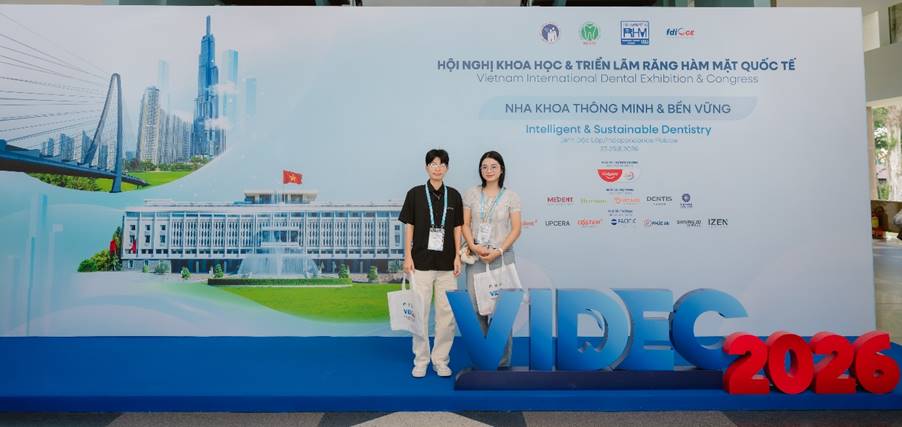
The Vietnam International Dental Exhibition and Congress (VIDEC 2026), held in Ho Chi Minh City from August 27 to 29, 2026, offered updates on emerging trends in oral health care. Alongside advances in treatment techniques, a recurring theme across the scientific sessions was the growing attention to biofilms, the oral microbiome, and early prevention strategies, all of which are shaping contemporary approaches to oral disease.
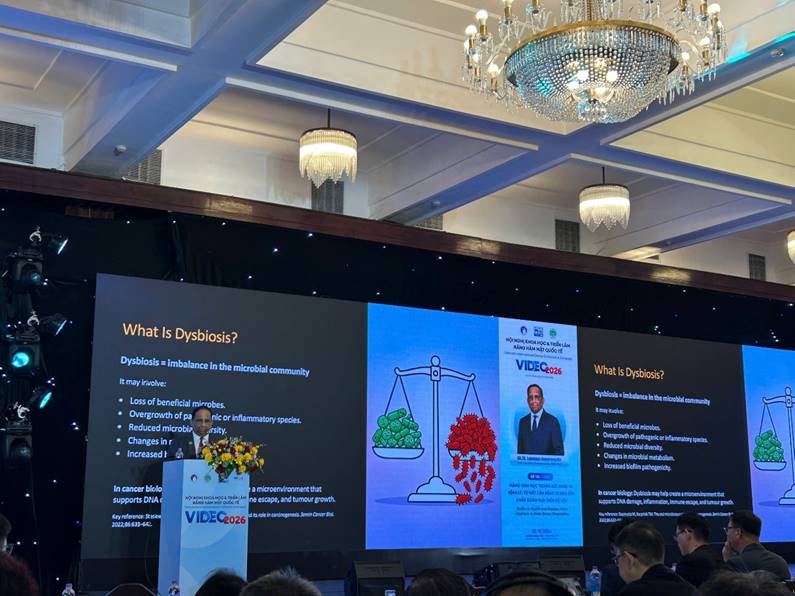
At the oral biofilm session on the morning of August 27, Professor Lakshman Samaranayake presented “Biofilms in Health and Disease: From Microbial Dysbiosis to Data-Driven Diagnosis.” A biofilm is more than a collection of bacteria attached to a tooth surface: it is a dynamic ecosystem shaped by microbial communities, host responses, and environmental factors. When this balance is disrupted, or dysbiosis occurs, the composition and activity of the microbiome may shift in ways that favor disease onset and progression. The presentation also highlighted the potential of microbiome profiling, biomarkers, and artificial intelligence (AI) to identify risk and inform personalized prevention strategies.
Building on this perspective, Professor Ngo Chi Hien emphasized the role of biofilm control in contemporary caries management, while Professor Robert M. Love examined the contribution of biofilms to pulpal and periapical disease in endodontics. Although these presentations addressed different specialties, they pointed to a shared shift in dentistry: increasing attention to biological causes, tissue preservation, and early intervention to prevent disease progression, alongside treatment of established lesions.
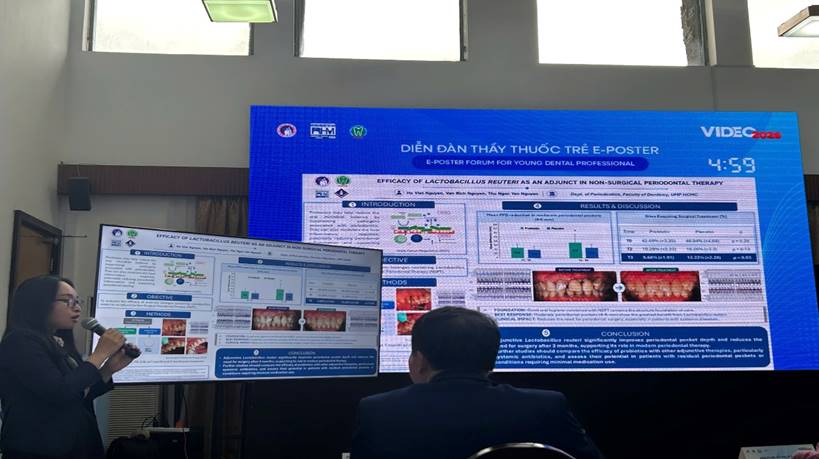
This perspective raises the question of whether the microbiome can be steered toward a healthier state. One example presented during the e-poster session on August 27 was a study of Lactobacillus reuteri as an adjunct to nonsurgical periodontal therapy. According to the preliminary three-month findings presented at the conference, the probiotic group had shallower periodontal pockets in the subgroup with moderate pocket depths (4–6 mm) and a lower need for surgical treatment than the control group; the reported differences were statistically significant (p < 0.05). More evidence is needed to establish the full clinical significance of these findings, but the study illustrates interest in probiotics as an adjunct to standard dental care.
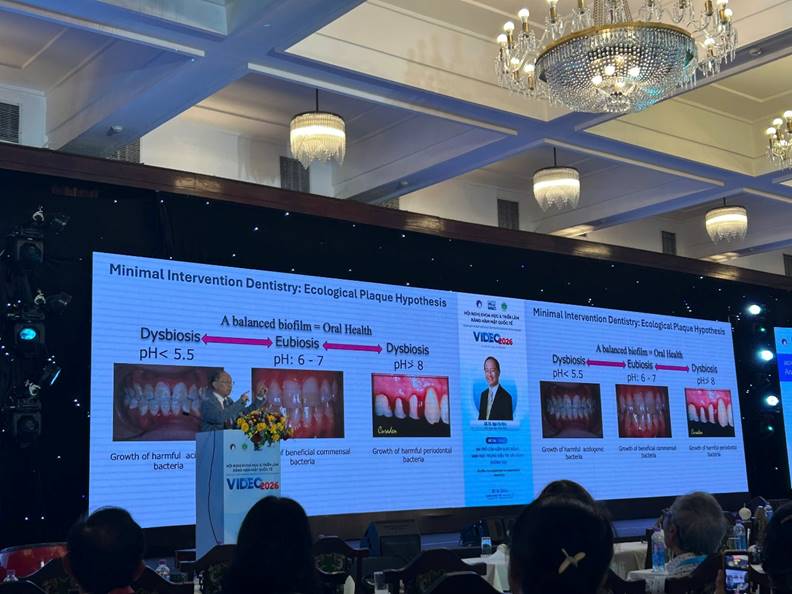
Sessions on August 28 and the morning of August 29 further highlighted the move toward risk management and long-term prevention. Established measures such as plaque control, fluoride, and xylitol remain important. At the same time, advances in sequencing and data analysis are enabling more detailed investigation of the microbial ecosystem as a whole, rather than a small number of individual pathogens. These approaches may help identify unfavorable changes in the microbiome earlier and guide more targeted interventions.
In Vietnam, this direction offers considerable potential but also presents challenges. Studies of cariogenic bacteria, periodontal pathogens, and conventional control measures are well established, whereas clinical trials of probiotics for oral health remain relatively new. Beyond selecting suitable microbial strains, probiotic products require human evidence of efficacy, safety, and effects on the microbiome. Findings for one probiotic strain cannot automatically be generalized to another strain or formulation.
This evidence gap also creates an opportunity for organizations with microbiology expertise and domestic research capacity. With its probiotic spore technology and experience developing microbiome-based solutions, LiveSpo has the potential to expand into oral health care. Probiotics may offer a way to support microbiome management, help maintain balance in the oral ecosystem, limit the overgrowth of unfavorable bacteria, and complement long-term prevention and oral care strategies. LiveSpo Oral Biome – SmileCARE could therefore represent a promising development direction as interest grows in safe, proactive solutions grounded in biological mechanisms.
Overall, VIDEC 2026 illustrated a broad shift in modern dentistry: from treating existing damage toward prevention, from focusing on individual pathogens toward managing the biofilm ecosystem, and from clinical experience alone toward increasingly data-informed decisions. This shift provides a foundation for continued research and evaluation of new microbiome-based approaches and for exploring their appropriate role in oral health care in Vietnam.